Real Estate Reputation Management: Complete Guide with 7 Best Tools (Compared)


You've probably Googled yourself at some point.
Maybe after a tough transaction, or maybe just out of curiosity.
And what you found, whether good or bad, is exactly what your next potential client sees before they ever pick up the phone to call you.
That's the reality of real estate today.
Before a buyer or seller reaches out, they've already checked your Google reviews, scanned your Zillow profile, and maybe scrolled through your Facebook page.
Their first impression of you wouldn't probably be from a handshake. But more from what other people have said about you online.
According to the National Association of Realtors, 87% of buyers use a real estate agent to purchase their home, and 93% use the internet as their primary source of information during the process.
Real estate reputation management isn't a nice-to-have anymore. It's the difference between a full pipeline and a quiet phone.
This guide walks you through everything.
What it actually means, the 7 best tools worth using right now, the problems agents run into most, and the strategies that genuinely move the needle.
What Is Real Estate Reputation Management, Really?
At its core, real estate reputation management is about understanding what people are saying about you online, acting on that information, and making sure the best version of your work is visible where it counts.
It covers more ground than just collecting Google reviews. It includes:
- How you show up in local search results
- What your Zillow and Realtor.com profiles look like
- How you respond to negative feedback
- Whether your business information is accurate and consistent across directories
- The testimonials on your own website or the lack of them
- What people are saying about you in places you might not even be checking
This applies whether you're a solo agent closing a handful of deals a year, a brokerage managing a team of 50 agents, or a property management company handling hundreds of rental units.
The platforms and priorities shift depending on who you are, but the principle stays the same: your online reputation directly shapes whether people choose to work with you.

Why This Matters More Than Most Agents Realize
Let's put some numbers to it, because the scale of the impact tends to surprise people.
A Harvard study found that a one-star improvement in online ratings can increase revenue by up to 9%.
For a business where a single transaction is worth 1000s of dollars in commission, every percentage counts.
For property managers specifically, research shows 71% of renters searching for an apartment won't even visit a property if the reviews don't look good.

They filter you out before you ever get a chance to show them the unit.
And 94% of consumers say an online review has convinced them to avoid a business.
Nearly everyone has walked away from a company purely because of what a stranger wrote online.
It's not just about trust - it's about visibility too.
Google's local search algorithm uses your review volume, your star rating, and your response activity to decide how prominently to show your business.
In fact, you can use Famewall to add google reviews star rating on search results
If you're not actively managing your reputation, you're likely ranking lower than competitors who do even if your service is actually better than theirs.
Buying or selling a home is one of the biggest financial decisions most people will ever make.
They're not choosing you the way they'd pick a restaurant. They're reading everything they can find before committing.
The Best Tools for Real Estate Reputation Management
Let's start here, because it's what most people are looking for.
The right tool makes a real difference, and the wrong one is just money and time you won't get back since you'll actually be using the tool to directly collect reviews from your customers.
Here's a breakdown of the best options available, what each one actually does well, and who it makes the most sense for.
Quick Comparison
| Tool | Best For | Starting Price |
|---|---|---|
Famewall | Easy to collect & share testimonials + social proof | Free or $11.99/month |
Birdeye | Multi-location brokerages | Custom pricing |
Podium | Solo agents / small teams | ~$289/mo |
ReviewTrackers | Analytics-focused teams | $89/mo/loc |
Widewail | Managed response service | Contact Sales |
Brand24 | Off-site monitoring | $249/mo |
BrightLocal | Local SEO + reputation | $39/mo |
Now that you know what tools are available, let's get into the why and the how, because a tool is only as good as the strategy behind it.
1. Famewall - Best for Collecting and Showcasing Testimonials on Your Own Website
Most reputation tools are built for monitoring and damage control.
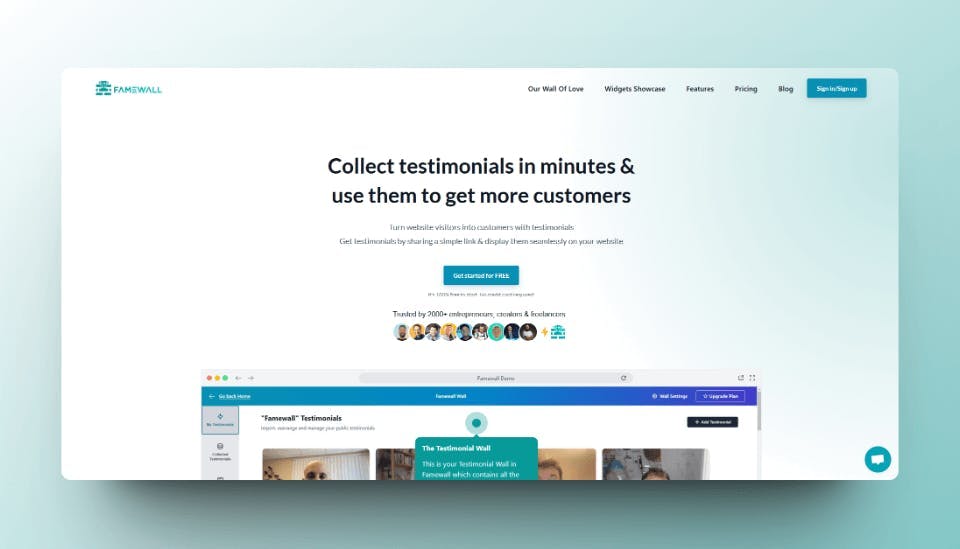
Famewall is built for something different, as it turns the happy clients you already have into visible social proof on your own website where buying decisions actually happen.
Think about the journey a potential client takes.
They hear about you from a friend, find you through social media, or click your ad.
Then they land on your website. That's the moment they decide whether to reach out or keep looking.
If there's no proof on that page that real clients had real results with you, you're relying entirely on whatever they happened to find on Google or Zillow.
Famewall fixes that directly. You send clients a simple link after closing - they submit their testimonial without needing to create any account and it all feeds into a display wall you can embed on your own site.

You can also pull in reviews you already have from Google, Zillow, and Realtor.com into the same place.

Video testimonials are supported too, which is worth flagging.
A short clip of a happy buyer talking about their experience with you carries far more weight than a written review.

It's human, it's specific, and it builds trust in a way that text alone just doesn't.
On top of that, individual testimonials can be turned into social media cards so that a great review doesn't just sit on your website; it becomes LinkedIn content, an Instagram post, something that works for you long after the closing date.

You can also embed the testimonials on your website using a variety of testimonial widgets which would build trust with clients & increase chances of them booking a call with you
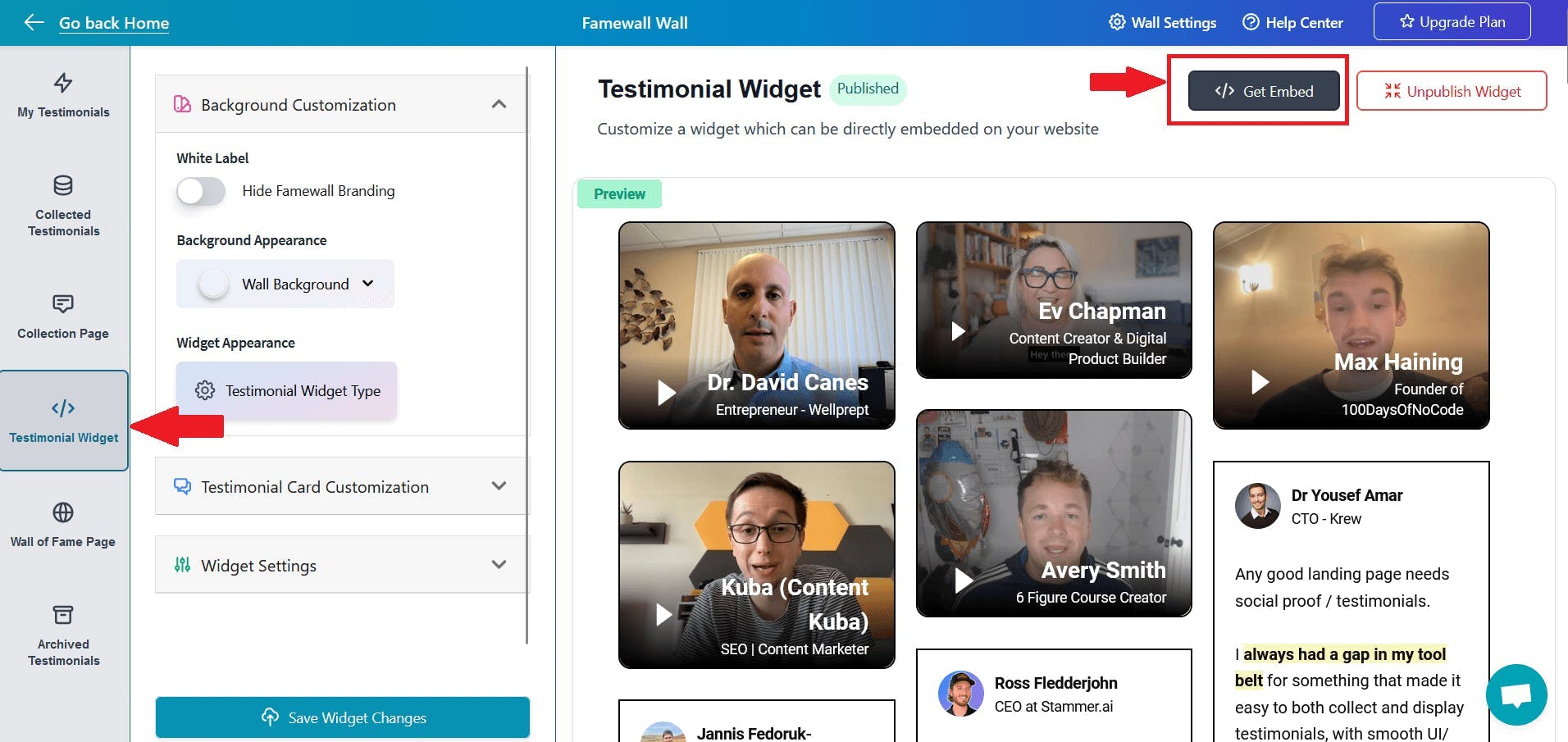
The widgets also show an automatic review summary of the best highlights from your testimonials
Not just this, you can also analyze what people have said about you and have it give you actionable insights from the data submitted by customers

Best for:
Individual agents, small teams, and brokerages who want to own and display their reputation on their own terms and not rent it on platforms they don't control.
Especially valuable if you're running any kind of paid traffic or content marketing where your website is the main conversion point.
Pricing:
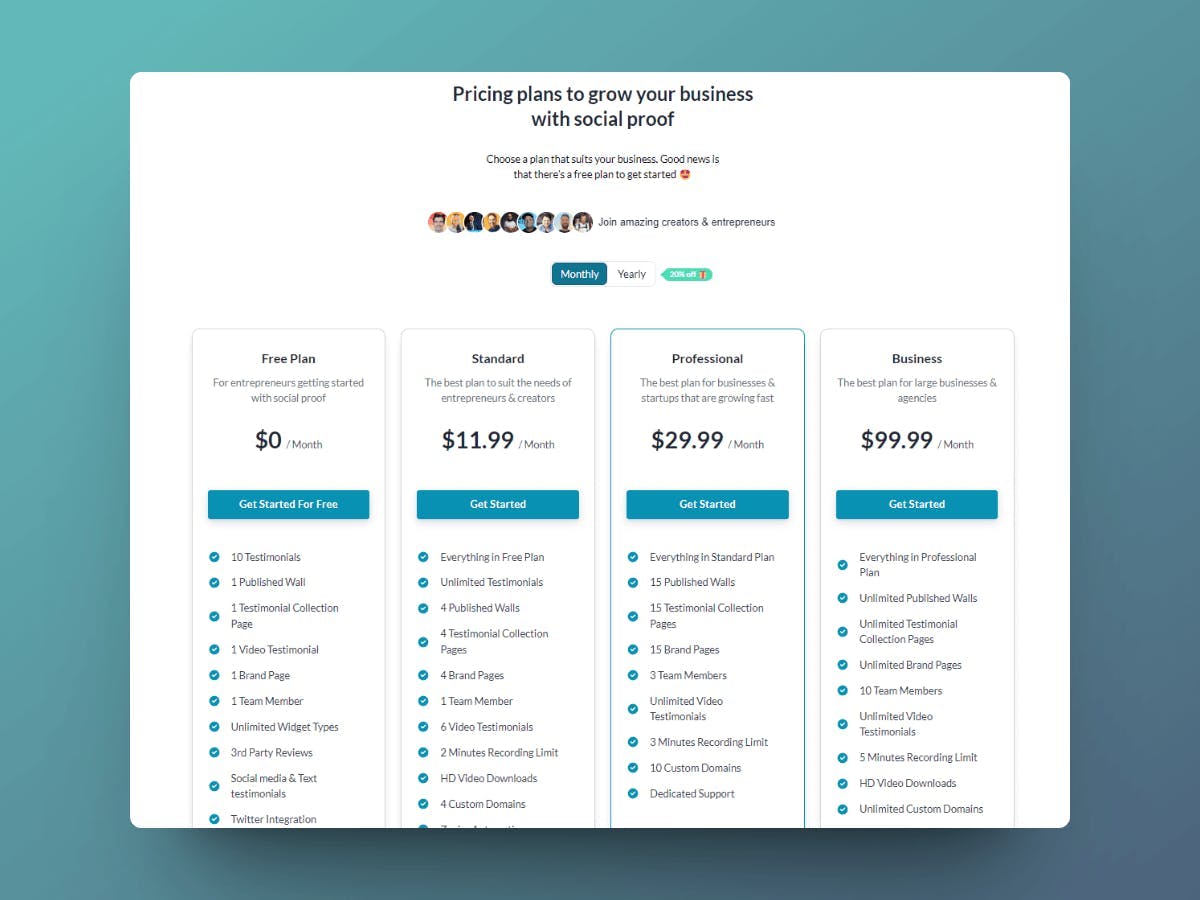
Free plan available. Paid plans are priced accessibly for individual agents starting from $11.99/month
Pros:
- Simple setup
- Very affordable pricing
- Works with any website builder
- Doubles as a social content engine
- Not subject to third-party platform changes
- You can download videos anytime
- Complete AI analytics with actionable insights
Cons
- Focused on review collection and display
- Might need extra tool if you need to monitor reviews
2. Birdeye - Best for Brokerages and Multi-Location Operations
Birdeye is another review collection tool. If you're running a team of 10+ agents or a brokerage with multiple offices, you need something more comprehensive than a testimonial widget.

Birdeye handles review generation but focuses on a limited number of platforms like Facebook & Google
It helps with listing management, social media, messaging, and analytics from a single dashboard.

It integrates with real estate-specific CRMs, so review requests go out automatically based on transaction activity in your existing systems.
The tradeoff is cost. The pricing plans are not available publicly but is reportedly to cost anywhere from $299 per month
Birdeye is a premium product and is genuinely overkill and over-budget for real estate businesses.
But for a mid-to-large brokerage managing reputation across multiple agents and locations simultaneously, it's one of the most capable platforms on the market.
Best for:
Mid-to-large brokerages, multi-agent teams, and property management companies at scale
Pricing:
Custom (premium tier) pricing, and you need to contact the sales team for the pricing

Pros
- Comprehensive all-in-one platform
- Strong CRM integrations
- Proven at enterprise scale
Cons
- Higher cost, which can be too much for most solo agents
- There is no option to display the reviews in multiple forms like images, wall of love etc
3. Podium - Best for SMS-Driven Review Collection
Podium's main strength is that it is a review collection platform that sends review requests by text message rather than email.

Text messages get opened at significantly higher rates than emails, which translates directly into more reviews captured per transaction.
After closing, you add the client's phone number. Podium sends a short message with a direct review link, and most people act on it quickly because it's low-friction.
It also gives you a unified inbox for SMS, webchat, and Facebook Messenger which is useful if you're managing multiple communication channels.

Starting around $289/month, it's best suited to agents doing enough volume to justify the cost.
Best for:
Solo agents and small teams who prioritize fast, frictionless review generation
Pricing:
You need to contact their sales team for pricing. But it starts anywhere from ~$289/month

Pros
- High SMS open rates
- Clean unified inbox for client communication
Cons
- Less comprehensive for larger operations.
- Analytics are fairly limited
4. ReviewTrackers - Best for Analytics and Competitive Benchmarking
ReviewTrackers helps businesses monitor, manage, and respond to reviews collected from platforms like Google, Tripadvisor, or even social media.

ReviewTrackers pulls reviews from platforms into one dashboard and focuses on analysis like sentiment trends & keyword patterns across your reviews.

If you are a big real estate company & have competitors you'd want to understand not just what people are saying but how you compare to competitors in your local market.
ReviewTrackers is the tool built exactly for that.
Best for:
Teams that want deep review analytics and competitive performance data
Pricing:
Pricing varies based on the number of business location. Starts from $89/month onwards

Pros
Strong analytics, competitive benchmarking, broad platform coverage
Cons
Review generation features are less robust than Birdeye or Podium
5. Widewail - Best for Managed Review Responses
Widewail is a platform that helps you collect online reviews & video testimonials
It is also focused more on helping you collect reviews via SMS

Widewail is mostly tailored for dealerships, including multi-location groups, where manual review management is unsustainable:
Increasing review volume and star ratings to improve online visibility. Analyzing feedback for operational improvements, such as identifying employee performance or service issues.
And collecting diverse feedback types such as reviews, surveys, videos

Best for:
Brokerages that want managed responses for multi-location groups
Pricing:
Pricing starts from $500/month

Pros
- Social ad monitoring included
- Ideal for dealerships seeking end-to-end automation
- DMS Integration
Cons
- More suited for an automotive use case
- Very expensive for the limited features
- Needs configuration & setup
6. Brand24 — Best for Off-Site Brand Monitoring
Brand24 is an AI-powered social listening and media monitoring tool focused on reputation management and tracking customer insights.

Brand24 tracks mentions of your name and brokerage across social media, news sites, forums, and blogs - not just the usual review platforms.
A surprising amount of real estate conversation happens in neighbourhood Facebook groups and local Reddit threads, and Brand24 is what surfaces it before it becomes a problem.

Best for:
Agents and teams who want early visibility into off-site reputation conversations
Pricing:
Pricing starts from $249/month

Pros
- Broad off-site coverage
- Early warning alerts
- Global language support
Cons
- Not a review management platform - needs to be used alongside one
- Very expensive pricing for the functionality
- Less focus on industry-specific customization compared to niche tools
7. BrightLocal — Best for Local SEO on a Budget
BrightLocal is an all-in-one local SEO platform that helps real estate businesses track local rankings, audit SEO performance, and handle online reviews.

BrightLocal combines local SEO tools like citation building, Google Business Profile audits, and reputation monitoring at a low entry price.

This is solid for individual agents who want to build visibility in a specific local market without a large monthly commitment.
Best for:
Budget-conscious agents prioritizing local search visibility
Pricing:
From ~$39/month

Pros
Affordable; strong local SEO toolkit; good for single-agent operations
Cons
Less robust review automation compared to enterprise platforms
The Problems Agents Actually Run Into
Before getting into strategy, it's worth acknowledging the frustrations that come up again and again
Getting clients to leave reviews is harder than it looks
Satisfied clients usually go quiet after closing.
They move in, life gets busy, and leaving a review drops off the list.
Reviews are a numbers game.
If you're only closing a handful of deals per month, you can't afford to let a single happy client slip by without capturing their feedback.
In such cases, you can use testimonial incentives to entice customers to leave you a testimonial

Negative reviews that feel completely unfair
Property transactions are emotional.
When something goes wrong, even something entirely outside your control, like a deal falling through at the last minute, clients sometimes post online in the heat of the moment.

Interestingly, many buyers are hesitant to leave negative reviews for real estate agents, partly out of concern about potential pushback.
That means the negative reviews that do appear often carry outsized weight, and responding quickly matters more than most agents realise.
Communication is the #1 complaint
When you look at patterns across Zillow and Google reviews, one theme dominates: lack of communication.
Not fraud, not incompetence - just agents who didn't respond fast enough or didn't keep clients informed throughout the process.
The good news is that this is largely preventable.
Automated check-ins, regular updates, and clear expectations set early in the relationship eliminate most of the complaints that turn into negative reviews.
Just try to drop in a check-in once in 2 days via text messages
Strategies That Actually Work
Build a system for getting reviews - don't leave it to chance
The agents with strong review profiles aren't just lucky. They have a repeatable process.
The right time to ask is when the relationship is at its warmest - just before closing or within 48 hours afterward.

Set the expectation early in the transaction: let clients know upfront that you'd appreciate their feedback once everything wraps up.
Make it part of your closing checklist.
After the deal completes, send a short, friendly message with a direct link.
You can direct your customers to a 3rd party platform with Famewall where customers after submitting a testimonial are taken to your Zillow page or Google Business page

Don't make them search for where to leave a review - that friction alone kills follow-through. Then follow up once more around 30 days later.
Respond to every review - including the positive ones
Most agents know they should respond to negative reviews.
But very few respond to positive ones.
Responding to good reviews signals to Google that your profile is active, and it shows potential clients that you're genuinely engaged - not just damage-controlling.
More than half of consumers expect a reply to a negative review within a week.
A critical review that sits unanswered for two weeks has already done its damage to everyone who saw it during that window.

For negative reviews, here's the framework that works:
- Write a draft, step away for an hour, then re-read before posting
- Acknowledge the experience without necessarily agreeing with every detail
- Keep it to three or four sentences - a long defensive response makes you look worse
- End by inviting them offline: "I'd love to sort this out. Please reach out at [email/phone]"
- Never argue publicly, even when the review is completely unfair
You can use review response generator as a starting point to generate a quick draft response
Showcase Testimonials Where People Actually Make Decisions
Third-party review sites are great for discovery.
Your own website is where decisions get made.
A testimonial section on your agent profile page, especially one with vide,o significantly increases how many visitors actually reach out.

Only 57% of agent websites feature client testimonials, which means nearly half of all agents are leaving their most convincing trust signal completely off the page where it matters most.
Tools like Famewall make this easy - collect testimonials through a simple link, import existing reviews from Google and Zillow, and embed the whole thing on your site.
Video is supported, and individual reviews can be turned into social media cards to keep building your reputation after every closing.
Handle Fake or Defamatory Reviews the Right Way
If a review comes from someone who was never your client, or contains clearly false information, don't ignore it but be strategic.
Verify first.
If you're confident it's fake or violates platform guidelines, report it with as much supporting evidence as you can provide.
Prioritise anything with words like "fraud" or "scam" - these affect search rankings and need fast action. If the content is potentially defamatory, get legal advice before responding publicly.
Whatever happens, don't argue in the public response section. Everyone else reading it is watching how you handle it.
How to Know If It's Working
Reputation management can feel abstract, so track concrete numbers:
- Average star rating (set a baseline, check quarterly)
- Review volume month-over-month
- Percentage of reviews you're responding to
- Your position in local search results
- Leads coming through Google Maps or local search
Connect it to revenue by tracking which enquiries mention finding you online, and by testing pages with and without testimonials to measure the difference in how many visitors actually reach out.
Frequently Asked Questions
What is real estate reputation management?
It's the practice of monitoring, shaping, and improving how you're perceived online through reviews, testimonials, business listings, and social media presence.
How do I get more reviews as a real estate agent?
Ask just before or immediately after closing.
Make it part of your standard process, send a direct link to your review page (not just a general request), and follow up once around a month later.
Can a real estate agent remove a negative review?
Usually not directly. Platforms like Google and Zillow don't remove reviews simply because you disagree. You can report a review that violates platform guidelines (fake account, spam, defamatory language).
The more practical approach is to respond professionally and generate enough positive reviews to put the negative one in context.
How much do online reviews actually affect leads?
Significantly. 93% of homebuyers go online first when researching agents.
A stronger review profile means higher local search rankings, more discovery, and better conversion when people land on your profile.
Does responding to reviews help with search rankings?
Yes. Google treats review engagement as a signal of an active, responsive business.
Responding consistently and naturally contributes to local search visibility over time.
Conclusion
Real estate reputation management isn't a one-time thing. It's a set of habits that, done consistently, compound into a reputation that generates leads on its own.
The starting point most agents overlook is the website.
Before you invest in any monitoring or automation tool, make sure the testimonials you've already earned are visible where people go to make their decisions. That's the foundation everything else builds on.
From there: build a process for collecting reviews after every transaction, keep your listings accurate, monitor your name across platforms, and respond to everything - positive and negative alike.
The agents who do this consistently don't just have better reputations. They have more predictable businesses.
Try Famewall for free to collect reviews from customers & add them to your website in minutes without writing a single line of code!